Whether you are a nursing student preparing for clinical rotations at Stanford Health Care, an engineer on a corporate campus team, or a childcare provider in Downtown Palo Alto, finding the right life-support training can feel surprisingly complex. Palo Alto sits at the intersection of world-class medicine and cutting-edge tech history. Between the modern medical research taking place near Stanford University and the historic Addison Avenue garage where Hewlett-Packard launched Silicon Valley, local professionals operate under strict regulatory standards.
Choosing the wrong course format or an unaccredited provider can lead to rejected employment credentials and lost time. This guide clarifies local training standards, breaks down specific certification requirements for Bay Area workplaces, and outlines how to secure an American Heart Association (AHA) credential right here in Palo Alto.
Key Takeaway: Healthcare professionals, clinical students, and first responders in Palo Alto generally require an American Heart Association Basic Life Support (BLS) credential featuring hands-on skills verification. Non-clinical professionals—such as teachers, daycare staff, and corporate emergency response teams—typically need a general CPR and First Aid certification compliant with OSHA or California EMSA guidelines.
Navigating Certification Needs Near Stanford Health Care and Downtown Palo Alto
Palo Alto’s professional environment creates distinct training requirements across different industries. A clinical researcher at the Stanford School of Medicine has vastly different certification parameters than a youth athletics coach near El Camino Real.
| Target Audience | Who Needs This? | Required Certification |
| Healthcare & Clinical | Nurses, Physicians & EMTsMedical & Nursing StudentsDentists & Clinical Researchers | AHA BLS Course (In-Person) |
| General Workplace & Public | Teachers & Daycare StaffFitness Trainers & CoachesCorporate Safety Teams | Heartsaver CPR / First Aid |
Healthcare and Clinical Personnel
Hospitals, outpatient clinics, and academic medical centers require the American Heart Association BLS CPR Certification Course. This curriculum covers high-quality CPR for adults, children, and infants, multi-rescuer team dynamics, automated external defibrillator (AED) integration, and airway management. If you work inside the Stanford Health Care network or local surgical centers, an online-only certificate without a hands-on skills test will not be accepted by credentialing offices.
Academic Institutions and School Districts
K-12 teachers, instructional aides, and daycare providers within the Palo Alto Unified School District must meet California Commission on Teacher Credentialing (CTC) or Emergency Medical Services Authority (EMSA) requirements. These guidelines call for pediatric CPR, AED, and First Aid training that includes verified physical practice with feedback mannequins.
Technology and Corporate Campuses
Tech firms located along Page Mill Road and University Avenue frequently maintain designated Emergency Response Teams (ERT). These workplace safety personnel require OSHA-compliant CPR and First Aid training tailored to adult medical emergencies, sudden cardiac arrest, and workplace injuries.
In-Person vs. Blended Learning: What Palo Alto Employers Accept
Understanding the difference between course delivery formats prevents costly re-training.
Fully Online Courses (Not Accepted)
Purely digital courses that issue a certificate after you watch videos and complete an online quiz do not satisfy professional requirements. The American Heart Association and California licensing boards require a real-time assessment of chest compressions and ventilation technique.
Blended Learning (AHA HeartCode®)
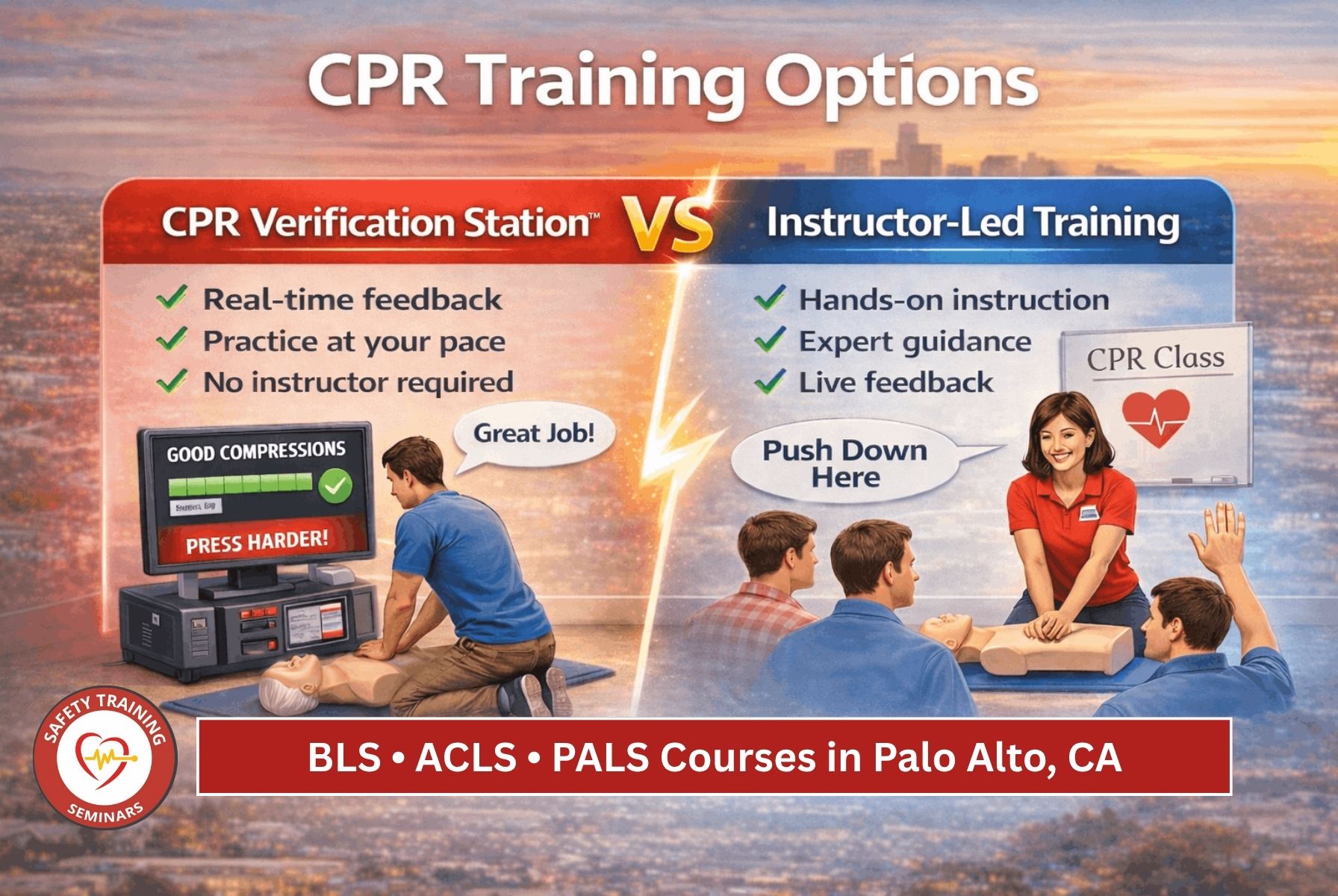
Blended learning combines self-paced online coursework with an in-person hands-on skills verification session. You complete the cognitive portion on your computer, print your completion certificate, and meet with an instructor to demonstrate physical competence on feedback mannequins. This format is widely accepted across healthcare systems and offers maximum scheduling flexibility for busy students and working professionals.
Traditional In-Person Classes
Instructor-led classroom courses deliver all lectures, video modules, and practical physical training in a single sitting. This format works best for individuals who prefer interactive group learning or who are completing their certification for the very first time.
What to Expect During Your Practical Skills Verification
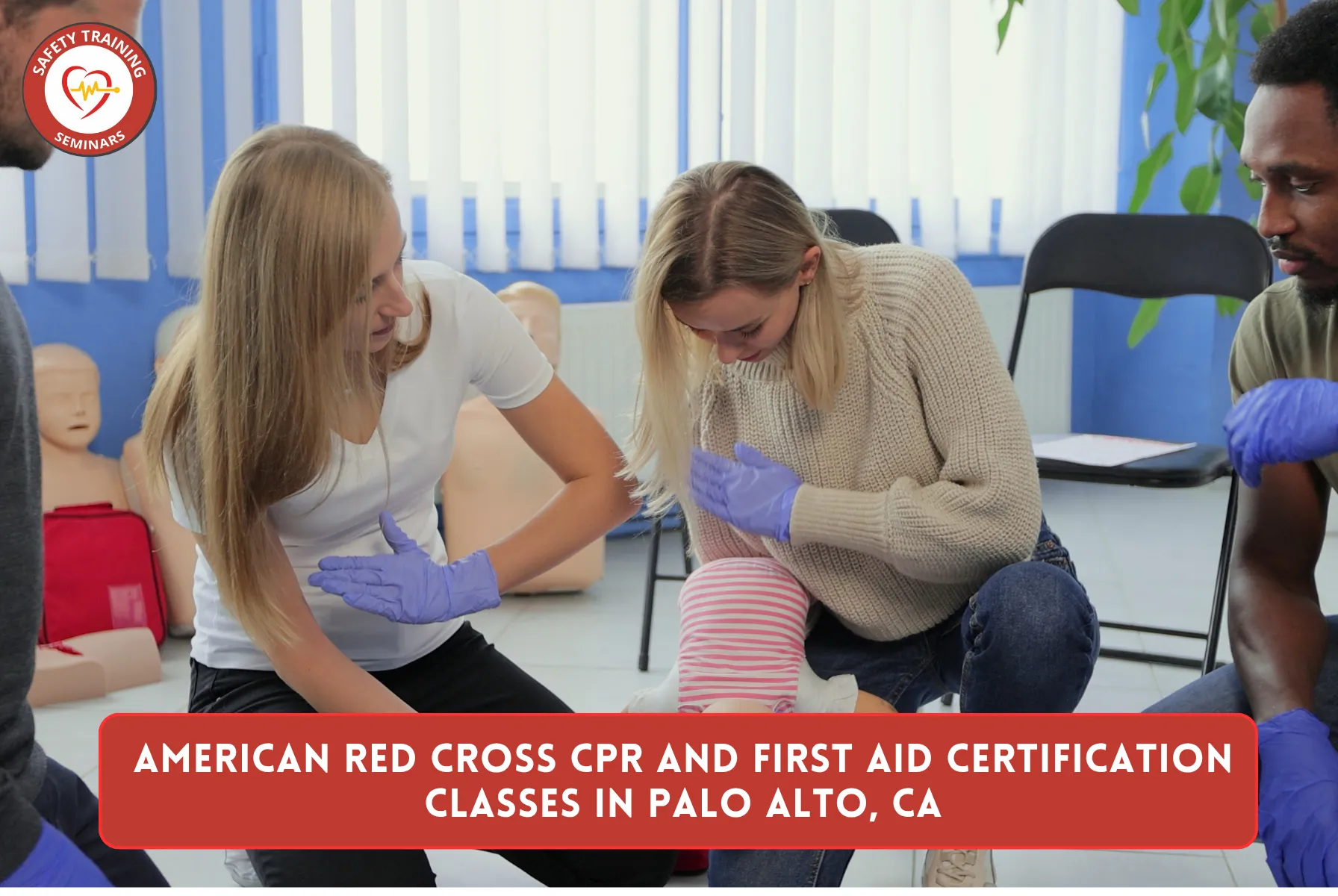
Regardless of whether you choose a full classroom setting or a blended skills session, your physical evaluation focuses on key core competencies established by current resuscitation guidelines:
- High-Quality Chest Compressions: Demonstrating correct hand placement, maintaining a rate of 100 to 120 compressions per minute, and achieving a compression depth of at least 2 inches for adults.
- Full Chest Recoil: Allowing the chest wall to expand completely between compressions to permit adequate cardiac refilling.
- Effective Ventilations: Using a barrier mask and a bag-mask device to deliver rescue breaths that produce visible chest rise without causing gastric inflation.
- AED Deployment: Unpacking, applying pads, and operating an automated external defibrillator safely within seconds of its arrival.
- Team Dynamics and Airway Obstruction: Managing multi-rescuer resuscitation scenarios and clearing foreign-body airway obstructions in conscious and unconscious victims.
Local Certification Options with Safety Training Seminars
For students and professionals seeking convenient local training, Safety Training Seminars provides a clean, well-equipped facility right in the heart of town.
Safety Training Seminars Palo Alto CPR Training Center
467 Hamilton Avenue, Suite 5, Palo Alto, CA 94301
Located just blocks from University Avenue, this facility provides weekly American Heart Association courses designed for easy access. If you are commuting from nearby Santa Clara County communities, you can also explore options through our Campbell CPR and BLS classes or book an appointment at our Cupertino life-support training center.
Those coming from the South Bay can review scheduled sessions at our Los Altos CPR course location or reserve hands-on skills practice at the Gilroy training site.
Upon successfully passing your written evaluation and practical hands-on skills test, you receive an official AHA eCard. These digital credentials are issued promptly, allowing you to forward proof of certification directly to your employer, school coordinator, or state licensing board.
Serving Professionals Across the Mid-Peninsula and South Bay
Palo Alto serves as a central hub for healthcare workers and corporate professionals residing throughout the surrounding region. Training sessions regularly accommodate students and employees commuting from:
- Los Altos and Los Altos Hills: Private practice clinicians, dental staff, and school personnel needing routine two-year BLS renewals.
- Mountain View and Sunnyvale: Allied health staff and tech workplace safety teams along the Highway 101 corridor.
- Menlo Park and Atherton: In-home caregivers, childcare providers, and private tutors fulfilling local safety requirements.
- Milpitas, Monte Sereno, and Los Gatos: Regional healthcare employees seeking weekend or evening skills appointments.
If you reside in the surrounding hills, you can check schedule details for CPR certification in Los Altos Hills to find a session that matches your availability.
Frequently Asked Questions
Which CPR course do I need for nursing school clinicals in Palo Alto?
Nursing programs and clinical placement sites in the Palo Alto area almost universally require the American Heart Association BLS Provider course. General CPR or non-AHA courses rarely satisfy clinical compliance standards. Always verify exact requirements with your school’s compliance coordinator before registering.
How long is an AHA BLS certification valid?
American Heart Association BLS eCards are valid for two years from the end of the month in which the course was completed. To maintain seamless employment or clinical eligibility, plan to schedule a renewal session during the month prior to your card’s expiration date.
Can I complete my CPR training entirely online?
No. While you can complete the cognitive portion of an AHA HeartCode® course online, you must complete an in-person, hands-on skills evaluation with an authorized instructor to earn a valid AHA eCard. Purely online certificates without a physical skills check are rejected by major healthcare institutions and regulatory boards.
What should I bring to my Palo Alto CPR class?
Bring a valid photo ID and a copy of your online completion certificate if you are attending a blended-learning skills session. Wear comfortable clothing that allows you to kneel on the floor comfortably while performing chest compressions on feedback mannequins.
Planning Your Next Steps
Securing the correct CPR credential requires understanding your employer’s expectations and selecting an accredited, hands-on training provider. Whether you are renewing an expiring credential or obtaining certification for a new job or academic program, choosing an authorized American Heart Association delivery format ensures your card will be accepted without issue.
Review course schedules, confirm your specific workplace requirements, and select a convenient training time at the Safety Training Seminars facility on Hamilton Avenue to keep your credentials current and compliant.